MRI studies for characterization of muscle diseases
MRI studies for characterization of muscle diseases
Our research groups also apply the developed MR measurement techniques to characterize metabolic and functional processes in patients with muscle disorders. Our goal is to measure early changes in muscle tissue and correlate these changes with progressive fatty tissue changes. The detection of early disease-related changes in muscle will help establish sensitive metrics for subsequent therapeutic studies.
We are currently seeking subjects for the following studies:
1) Longitudinal MRI study of Duchenne muscular dystrophy (DMD)
Study Description:
The purpose of this study is to describe the progression of Duchenne muscular dystrophy using different MRI methods. The lower legs of the study participants will be examined with clinical MRI measurements and novel MR contrasts. Patients will be invited for MRI examinations at the University Hospital Erlangen a total of 4 times with an interval of 6 months.
Basic criteria for participation:
- Minimum age 4 years
- Able to walk (at least with support)
- Confirmed diagnosis of DMD
In addition, we are looking for healthy volunteers (male, 5-12 years) who will be examined once by MRI.
2) MRI follow-up study of facioscapulohumeral muscular dystrophy (FSHD)
Study Description:
The purpose of this study is to describe the progression of facioscapulohumeral muscular dystrophy using different MRI methods. For this purpose, the lower legs of the study participants will be examined with clinical MRI measurements and novel MR contrasts. Patients will be invited for a total of 2 MRI examinations at an interval of 12 months at the University Hospital Erlangen.
Basic criteria for participation:
- All genders
- Minimum age 18 years
- Able to walk (at least with support)
- Confirmed diagnosis of FSHD
In addition, we are looking for healthy volunteers (all genders, 18 years and older) who will be examined once by MRI.
3) MRI follow-up study of Becker muscular dystrophy (BMD)
Study Description:
The purpose of this study is to monitor the progression of Becker muscular dystrophy using different non-invasive MRI methods. For this purpose, the lower legs of the study participants will be examined with clinical MRI measurements and novel MR contrasts at 3 Tesla and 7 Tesla. Patients will be invited for a total of 2 MRI examinations at an interval of 12 months at the University Hospital Erlangen.
Basic criteria for participation:
- No minimum age
- Able to walk (at least with support)
- Confirmed diagnosis of BMD
In addition, we are looking for healthy volunteers who will be examined once by MRI.
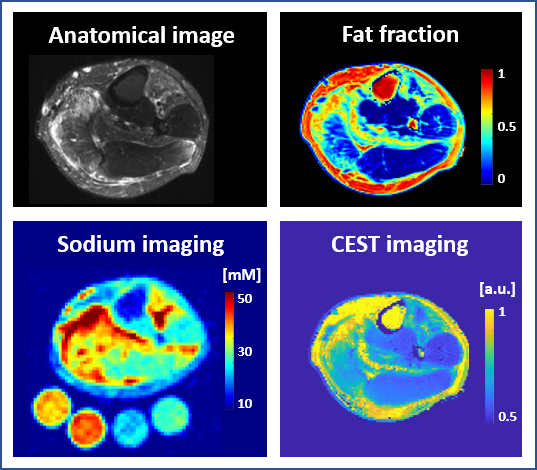
Figure: MRI images of the lower leg of a patient with muscular dystrophy. The different MRI image contrasts allow the detection of disease-related changes in the muscle. Among other aspects, we want to assess the fatty degeneration of the muscle (“fat fraction”: the higher the value, the higher the percentage of fat in the muscle), water accumulation (anatomical image: increased signal intensities reflect water accumulation), disturbances of the sodium household (“sodium imaging”) and metabolism (“CEST imaging”). |